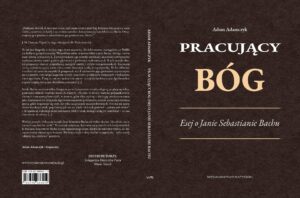
Książka Adama Adamczyka jest najobszerniejszą polskojęzyczną pracą poświęconą geniuszowi Jana Sebastiana Bacha. Autor opowiada o fascynujących zakosach życia wielkiego kompozytora, który – w przeciwieństwie do Haendla, Beethovena czy przykład Chopina – wydaje się pozbawiony biografii. W książce znajdujemy także obszerne omówienie twórczości Bacha, którą autor chce widzieć jako nierozwieralną część „nudnego” życia artysty. Niewątpliwym urozmaiceniem książki – i bodaj nie mającym odpowiednika w jakichkolwiek monografiach twórcy Mszy h-moll – są dziesiątki szczegółowo uzasadnionych propozycji fonograficznych dotyczących „największego kompozytora w historii ludzkości”, a także szereg refleksji poświęconych zjawisku ruchu muzyki dawnej. „Ruch muzyki dawnej proponuje obecnie nieprzebraną mnogość estetyk i stylów interpretatorskich. Fascynacja sztuką wykonawczą jest zatem równowarta fascynacji sztuką kompozytorską. Bacha odbieram i kocham tak samo we wszystkich przejawach moich zachwytów jego geniuszem artystycznym: życia i muzyki oraz całego bogactwa estetyk, sposobów i problemów związanych z wykonywaniem jego dzieła. Tutaj nic nie jest osobne i nic nie jest mniej lub bardziej ważne” – jak możemy przeczytać w książce.
Adam Adamczyk’s book is the most comprehensive Polish-language work on the genius of Johann Sebastian Bach. The author recounts the fascinating twists and turns in the life of the great composer, who – unlike Handel, Beethoven or Chopin, for example – seems to lack a biography. The book also contains an extensive discussion of Bach’s oeuvre, which the author wants to see as an inscrutable part of the artist’s ‘boring’ life. An undoubted enrichment of the book – and perhaps unparalleled in any monographs of the creator of the B minor Mass – are dozens of thoroughly substantiated phonographic proposals for ‘the greatest composer in the history of mankind’, as well as a series of reflections on the phenomenon of the early music movement. ‘The early music movement currently proposes an inexhaustible multiplicity of aesthetics and interpretative styles. The fascination with the art of performance is therefore balanced by a fascination with the art of composition. I perceive and love Bach in the same way in all manifestations of my admiration for his artistic genius: life and music and the whole wealth of aesthetics, modes and problems associated with the performance of his work. Here, nothing is separate and nothing is more or less important’, as we can read in the book.